
My method boils down to one simple idea: make your decisions sharper, your delivery smoother, and your results more measurable.
I adapt to your operating model (frameworks, rituals, tooling) and, when useful, I integrate a governed agentic layer: agents that produce traceable artifacts, with human checkpoints in the right places.

My method rests on strong convictions, applicable to any context. They guide my choices and structure every engagement. Discover the Frame & Structure approach →

A shared direction and explicit decisions create useful, lasting velocity.
We move forward with visible deliverables: maps, specs, roadmaps, checklists.
Simple rituals that protect focus and make trade-offs transparent.
What matters is measured, tracked, and tied to impact (users + team).
AI accelerates structuring and exploration; the decision remains human.
"To orchestrate is to maintain coherence in motion."
— Vincent Lappartient
Design and execution are not two separate worlds: they are two loops that feed each other. The first reduces uncertainty (purpose, need, choices). The second makes the trajectory real (cadence, quality, impact).
Agentic AI is a lever. I use it to turn intent into clear deliverables, accelerate implementation, and strengthen verification — always with guardrails. Explore the Agentic AI approach →
Context, criteria, constraints
Impacts and risks assessed
You / sponsor / CPO / CTO
Tasks, dependencies, milestones
Integration, delivery
Tests, review, compliance
Here are examples of deliverables you get — whether it's about framing a project, orchestrating its design, or accelerating with AI.
What it unlocks: a shared language and success criteria.
What it unlocks: UX priorities and tipping points.
What it unlocks: coherence, dependencies, trajectory.
What it unlocks: visibility, trade-offs, cadence.
What it unlocks: steerable execution, less ambiguity.
What it unlocks: cleaner delivery, less rework.
What it unlocks: consistency, execution speed.
What it unlocks: reproducible quality, confidence.
What it unlocks: learning loop (measure → decide → iterate).
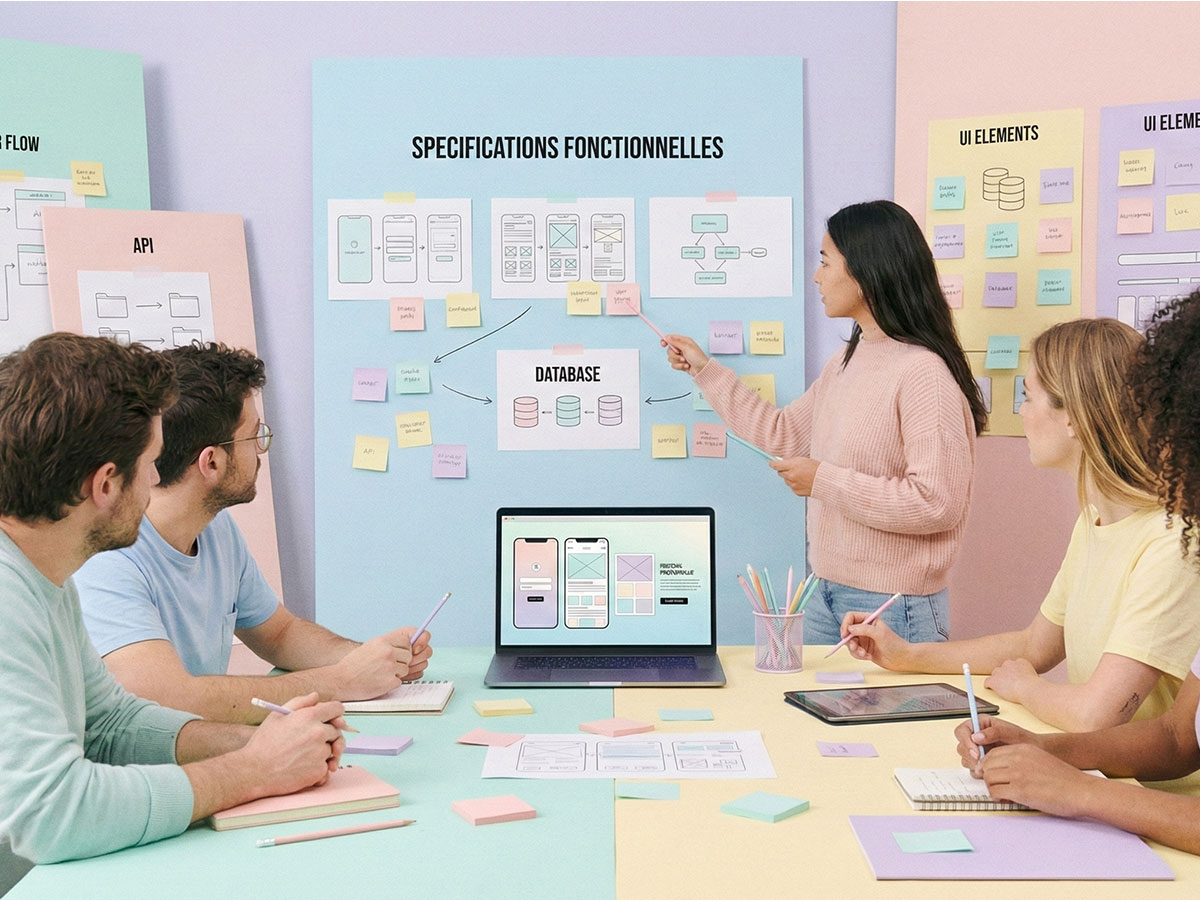
My goal is not to multiply meetings: it's to create a shared tempo. A few well-chosen rituals are enough to align, arbitrate, and secure. See how I orchestrate teams →
Decisions, priorities, risks
Dependencies, blockers, quick trade-offs
Release readiness + quality gates
Usage signals, impacts, next iterations
SAFe, Scrum, Shape Up, BMAD... the name matters less than the clarity of decisions and the quality of artifacts. I maintain a stable framework (loops, artifacts, governance) and adapt it to your rituals, constraints, and culture.
(or equivalent)
Access, permissions, scopes: AI has no "free pass." Sensitive information stays protected.
Tests, review, quality gates, metrics: the goal is reproducible quality.
AI accelerates the production of options and artifacts. Structural decisions remain explicitly human.
How Agentic AI can accelerate the design of your MVP without sacrificing quality or governance.
How to turn a strategic vision into steered execution with clear milestones and adapted governance.
How to go from a vague idea to a clear product, user-centered and structured for execution.
No. I adapt to your existing frameworks (Scrum, SAFe, Shape Up...) and your tooling. The goal is to strengthen your practices with a stable framework (loops, artifacts, governance), not to rebuild everything.
Agentic AI is never mandatory. I integrate it only when it provides a real advantage (clarity, speed, quality) — with clear guardrails and human validation at key stages. Many engagements work very well without it.
Depending on the engagement: problem framing, journey mapping, architecture map, roadmap, structured backlog, specs, minimal design system, quality gates, KPI dashboards. Each deliverable is actionable and transferable to your teams.
I systematically sign an NDA. Deliverables remain your property. For AI tools, I favor privacy-respecting solutions (self-hosted, zero-data-retention). AI has no "free pass" on your sensitive data.
I work with your existing tools (Figma, Notion, Jira, GitHub, PostHog... or equivalents) and fit into your rituals. The goal is to create a shared tempo without multiplying meetings or tools.
A 30-minute call to understand your context, your challenge, and your main constraint. Then: quick framing, first deliverables within a few days, and adjustment of the setup based on your feedback.
Share your context, your challenge, and your main constraint, and I'll propose a simple framing and a tailored engagement path.


