OpenAI wants to raise one trillion dollars. NEO promises a humanoid butler for 500 dollars a month. And Silicon Valley is discovering a new weapon: sex.
Three stories told by Carlos Diaz in Silicon Carne, which, taken together, paint the same question: how far will tech go!
OpenAI wants to raise 1 trillion dollars
From idealism to market mechanics
"Silicon Valley is a machine for betraying its own ideals." -- Carlos Diaz, *Silicon Carne*
OpenAI hasn't changed its nature. It has admitted its nature.
Founded in 2015 to "save humanity," the startup has become a Public Benefit Corporation: a hybrid structure that authorizes profit in the name of the public good.
"OpenAI simply acknowledged what everyone already knew: in the AI race, it's the treasury, not morality, that sets the pace." -- Carlos Diaz
Large AI models cost more to train than a power plant costs to build.
GPUs are replacing refineries.
Result: OpenAI wants to raise up to 1 trillion dollars to fund a new generation of compute, researchers, and sector-specific products.
Key figures:
- Current valuation: $500 billion
- Projected 2025 revenue: $13 billion
- 2030 ambition: x15
- Microsoft's share: $13 billion invested for 27% exposure
OpenAI is no longer selling software: it is absorbing human functions.
Finance, healthcare, legal, industry: each client company no longer pays for a product, but to rewrite its organizational chart.
Microsoft: control without ownership
In the shadow of this expansion, another player pulls the strings: Microsoft.
Officially, it's just a strategic partner.
In reality, it orchestrates the entire pipeline: hosting (Azure), distribution (Copilot), integration (Office, Windows), and model deployment through its cloud.
"Microsoft is the invisible infrastructure of AI. They don't own the brain, but everything that feeds it." -- Jeremie Michel
It's a masterstroke: control without ownership.
Redmond captures the flows without bearing the risks.
And Sam Altman?
OpenAI's CEO holds no shares (symbolic salary, zero equity) but wields colossal orchestration power.
His capital is his network: investors, heads of state, engineers, strategists.
In the new Silicon Valley, power is no longer shareholder-based, but orchestral.
Understanding the "Public Benefit Corporation"
A PBC authorizes profits, but requires that they serve a public interest objective.
For OpenAI, this means: "advancing toward beneficial AI, while ensuring growth."
In plain terms: an NGO with a spreadsheet.
Sovereignty according to OpenAI
The shift to PBC also marks the birth of a new type of entity:
the corporation-state.
Its weapons: compute, models, human capital.
Its borders: bandwidth.
"General AI is not a technology, it's a foreign policy." -- Wallerand Moulle-Berteaux
The question is no longer "who will have the most powerful AI," but "who will set the rules of the game."
And in this race, governments already seem one step behind.
2. NEO promises a humanoid butler for 500 dollars a month
The robot enters the home
While OpenAI builds brains, 1X Technologies builds bodies.
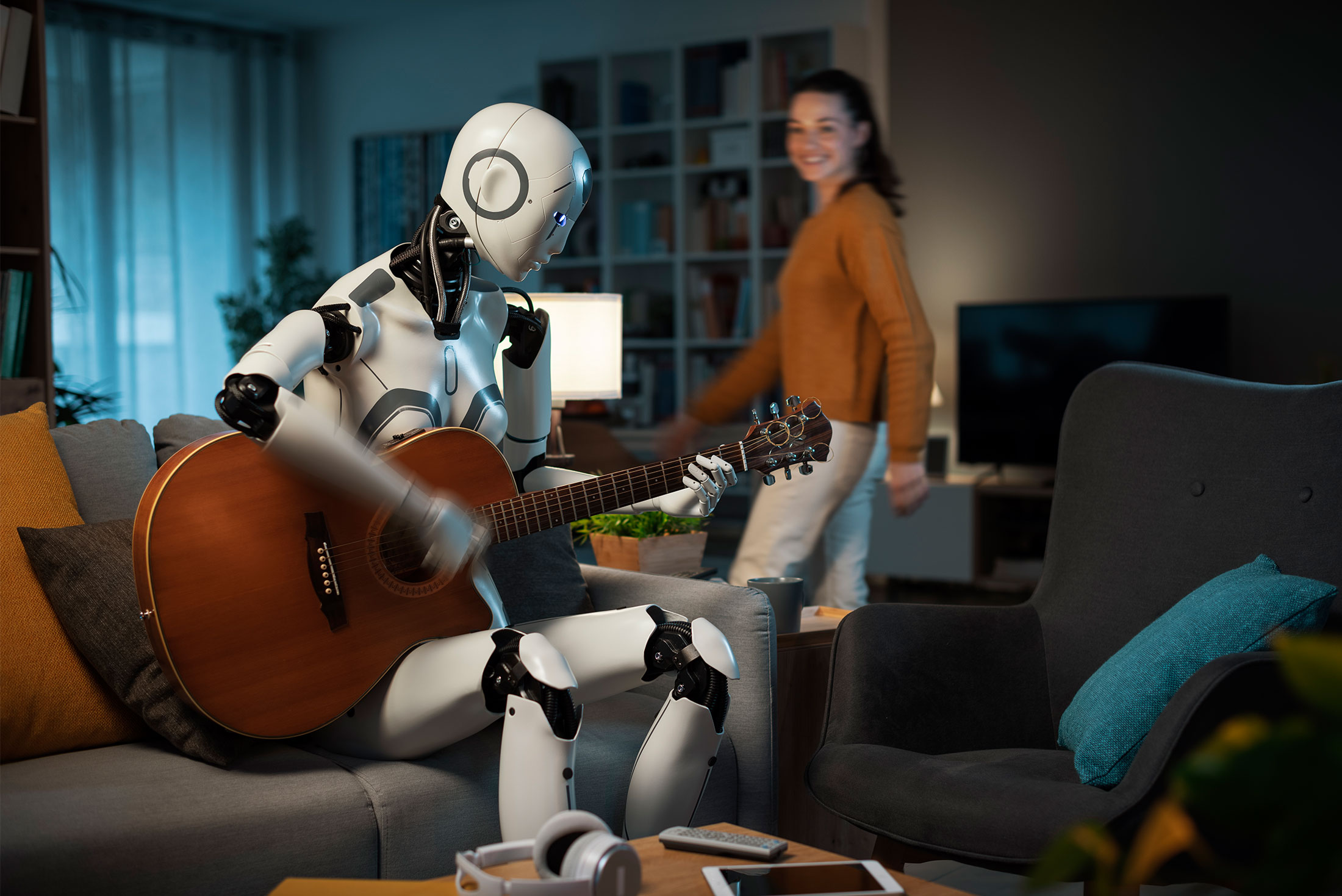
Their robot NEO, priced at 499 dollars per month, promises to fold your clothes, tidy your kitchen, and do the dishes.
But behind the tech dream lies a stranger truth:
in its initial version, the robot is remotely operated by humans in virtual reality.
"Behind every robot, there's a human. Behind every gesture, a data point. Behind every data point, a smarter model." -- Anji Ismail
This is the founding compromise of modern robotics: no useful AI without real data.
And to learn, NEO must observe... your habits, your interiors, your gestures.
Tele-operation and the privacy gray zone
Imagine: while you're working, your robot is cleaning.
But it's sometimes controlled by a stranger, somewhere else in the world, to help it learn.
The onboard camera becomes an industrial eye.
"It's an Uber for manipulation: you pay for a robot, you get a remote human." -- Carlos Diaz
Every corrected gesture, every annotated error feeds the future model.
The home becomes a massive training laboratory.
Privacy is no longer an option, it's a technical parameter.
And engineers will soon need to design not "safe" robots, but socially acceptable ones.
NEO, the subscription robot
- Price: $499/month (or $20,000 to purchase)
- Goal: 10,000 units delivered by 2026
- Technology: learning through human tele-operation
- Ambition: 1 million units by 2028
- Investors: Tiger Global, OpenAI Startup Fund
From the hand to the data
Why humanoid?
Because our world is designed for the human hand: handles, drawers, buttons, stairs.
Solving the hand means solving the world.
But until it is "mastered," humans will be needed in the loop.
Which, paradoxically, will accelerate its autonomy.
"The more humans behind the robots, the more robots learn to do without them." -- Carlos Diaz
The dilemma is clear: more comfort, less privacy.
And Europe, true to form, will regulate while the Americans deploy.
Sex Warfare in Silicon Valley
Spies, LinkedIn, and trade secrets
The third story told by Carlos Diaz reads like a spy novel.
Except it's true.
According to the Times of London, Chinese and Russian female spies are targeting American tech engineers and executives.
Their weapon: LinkedIn.
Their strategy: seduction, marriage, children... then information extraction.
"Security is no longer a matter of firewalls, but of libido." -- Carlos Diaz
Estimated losses amount to 600 billion dollars per year.
Industrial leaks, hostile takeovers, military secrets.
A silent war, without missiles, waged through connect requests and private messages.
The engineer, the new intelligence target
Agencies now speak of "war of hearts and minds 2.0":
exploiting emotional and social vulnerabilities.
The engineer is no longer just an employee: they are a human endpoint.
"You can harden a system, but not a conversation." -- Wallerand Moulle-Berteaux
This intimate war blurs the boundaries between national security, economic espionage, and privacy.
And for a Silicon Valley obsessed with transparency and trust, it's a paradox: the more it connects, the more it exposes itself.
600 billion dollars gone
Every year, the United States estimates the cost of intellectual property leaks at 600 billion dollars.
A portion of these losses is believed to be linked to manipulations targeting individuals rather than infrastructure.
Conclusion: discernment as the last firewall
OpenAI builds the brains.
1X Technologies builds the bodies.
LinkedIn provides the entry points.
The rest?
Our discernment.
Silicon Valley has crossed a threshold: the one where technology no longer merely augments humans -- it begins to replace, observe, and seduce them.
"Protect your software, but also your underwear." -- Carlos Diaz, final word
Ironic, but fair.
Because as machines grow in intelligence, humanity will need to relearn vigilance -- that analog quality that nothing can automate.