Does the future of energy go through nuclear?
Between the promise of a carbon-neutral world and the reality of electrical outlets, there is an energy system that hates slogans.
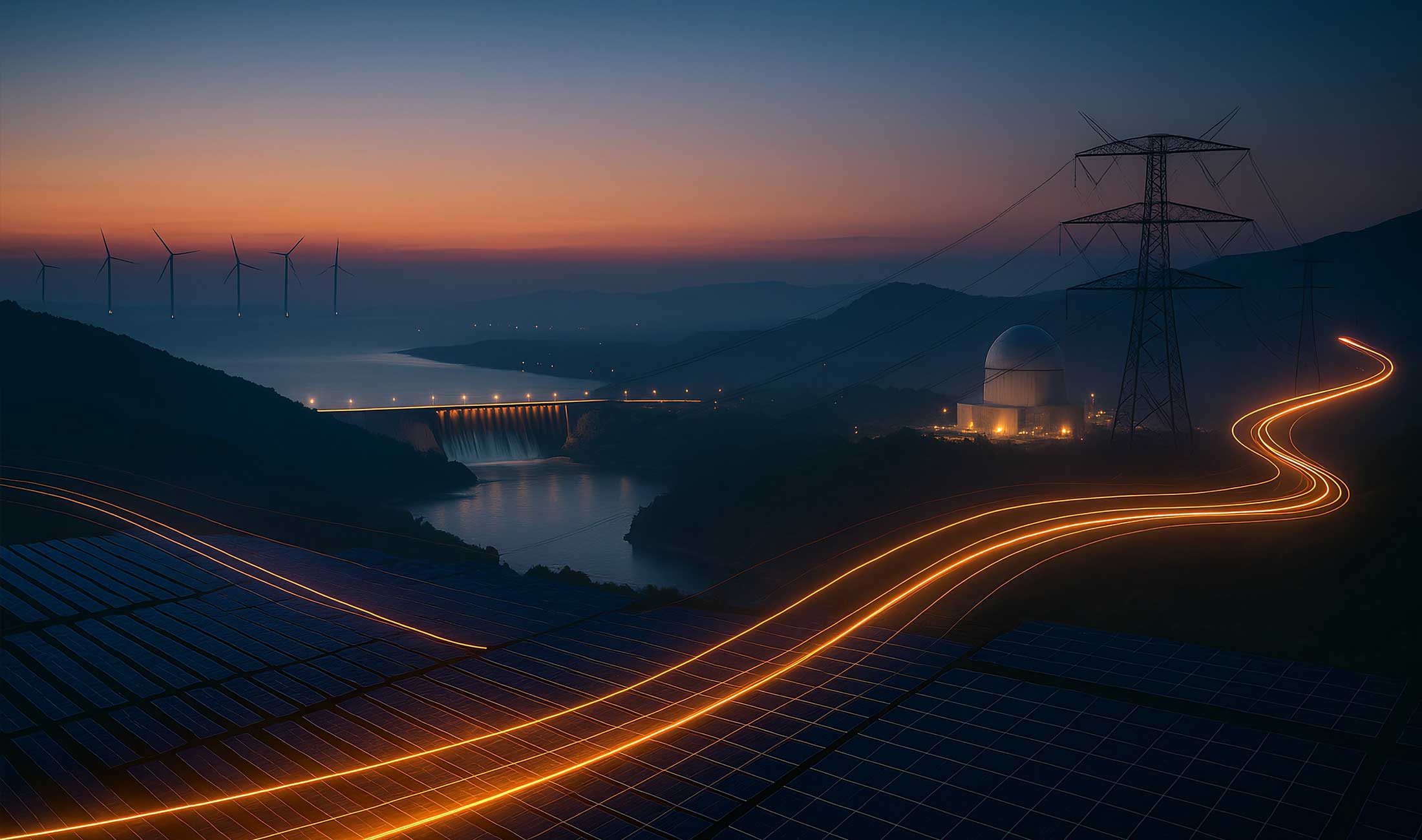
We would like an "ON" button for winter, stable prices for households, and zero CO₂ for the planet. In reality, we must compose: we need instruments that can be dispatched on demand (nuclear plants, dams, geothermal...), weather-dependent energies (wind, solar), storage (batteries and reservoirs that keep the rhythm), grids (the highways of electricity), and a bit of sobriety (stop running the machine for nothing).
Introduction: At 50 hertz, the country breathes
On a winter evening, demand surges. In a control room, eyes remain fixed on the grid frequency, that 50-hertz heartbeat that must not falter. If there is not enough wind, solar is already asleep. Then we call on what responds immediately: hydroelectric dams, geothermal when available, and nuclear, the silent backbone. The rest of the time, as soon as the sun blazes and the wind picks up, we fill the batteries, export, and reinforce the lines. It is a symphonic orchestra, not an electric guitar solo. Without harmony between these dispatchable, intermittent, stored, and intelligently managed sources, everything collapses.
What complicates everything is that the climate does not read press releases. It counts what we emit now. Yet each technology comes with its own set of constraints: carbon across the entire life cycle, guaranteed power output, different time scales, and above all a "system" cost that exceeds the simple price per kilowatt-hour displayed. Raw materials are needed (copper, lithium, uranium, rare earths), water, lines to build, deadlines to meet, social acceptability to earn, and on the demand side, smart savings to activate.
At the heart of this puzzle lies a burning question: does the future of energy go through nuclear? Is it the indispensable backbone of tomorrow's energy mix, or simply one pillar among others, to be balanced with bold alternatives? In a world where 31 countries have pledged to triple their nuclear capacity by 2050 to achieve carbon neutrality, this debate is no longer theoretical.
It is about anticipating to build, not enduring. We will explore today's realities, the concrete advances on the 2030 horizon, new reactors and the role of grids and storage, the contrasting scenarios for 2050 with three credible paths, each with its strengths and trade-offs, then we will look ahead to 2100 and beyond, where fusion, super-deep geothermal, and space-based solar could change the scale of the game.
But first, let us dive into today's reality, before dreaming of tomorrow.
Today: the reality that brings everyone together
Current constraints
The energy reality brings everyone together, whether you are pro-nuclear or a fan of solar panels. It does not bother with ideals; it imposes its rules, relentlessly.
Carbon, first. The climate counts emissions now, not in some vague future. Every technology has a footprint across its entire life cycle: extraction, manufacturing, transport, end of life. A solar panel or a wind turbine emits little during operation, but their production swallows concrete, steel, and metals, and if gas is used as backup during dips, CO₂ shows up.
Next, producing when it is needed, not just on an annual average. Imagine: a demand peak at 6 PM, with no wind or sun. Weather-dependent energies shine by their intermittency, forcing rapid responses. This is the challenge of guaranteed power, where the system must juggle between peak hours and seasonal lows. Batteries for a few hours, but to get through the entire winter, not so simple. Time scales complicate everything: lithium-ion batteries handle hours; for days or weeks, you need hydro reservoirs or hydrogen, still emerging.
Materials and space matter. A more electric world demands more copper, lithium, nickel, magnets, and surface area. Space too: a solar farm takes square kilometers, while a reactor compresses everything into a stadium.
Water and extreme heat. Plants requiring cooling, whether nuclear or fossil thermal, are sensitive to droughts, hence choices of sites and cooling technologies adapted to the future climate. Conversely, wind and solar consume very little water during operation.
Grids, those invisible highways. The more we rely on weather, the more we need lines to transport electricity from windy or sunny areas to cities, and long-distance connections to pool risks. Without a grid, clean energy remains stuck.
The calendar is money. Between the idea and the working outlet, there are permits, construction sites, grid connections. A major project takes years to emerge, a solar park moves faster but requires ready lines and flexibility on the other end.
And everywhere, local acceptance. Landscape, noise, safety, biodiversity, waste: nothing is built sustainably without trust and shared value.
Finally, demand. The cheapest and cleanest kilowatt-hour is the one not produced: insulation, fine-tuned heating control, shifted industrial processes, smart vehicle charging.
In the background, a reality prevails: with hotter summers and more frequent droughts, we will sometimes need to pivot quickly, adapt sites, reinforce lines, change the scale of storage. These constraints weigh on all technologies, including nuclear, which brings its strengths, but not without hitches.
Nuclear today
Imagine a maintenance visit at a power plant: the smell of hot metal, an operator in coveralls checking off a list, valves and sensors. It is a continuous service that delivers a lot of electricity in a small space. A reactor occupies the equivalent of a stadium but powers an entire city, 24 hours a day, without depending on wind or sun. With about 420 reactors in operation worldwide and nearly 10% of global electricity produced, nuclear stabilizes grids against the intermittency of renewables. A dispatchable backbone, zero lifecycle emissions, reliable for winter peaks.
But nothing is magic. Construction sites often stretch over 5 to 10 years, slowed by stringent safety regulations (essential after lessons like Fukushima) that inflate costs and timelines.
Waste management is operationally mastered, but social consensus on long-term geological storage remains to be built. Heat waves make cooling more delicate, hence the rise of cooling towers, which are more complex. Site security and the shortage of qualified skills are limiting factors.
Extend or rebuild. Many countries extend the life of their reactors: quick, proven, low-carbon. Building new ones prepares the next decade: restarting an industry, industrializing, securing the supply chain. Both coexist: we extend to get through the winters, we rebuild for the long term.
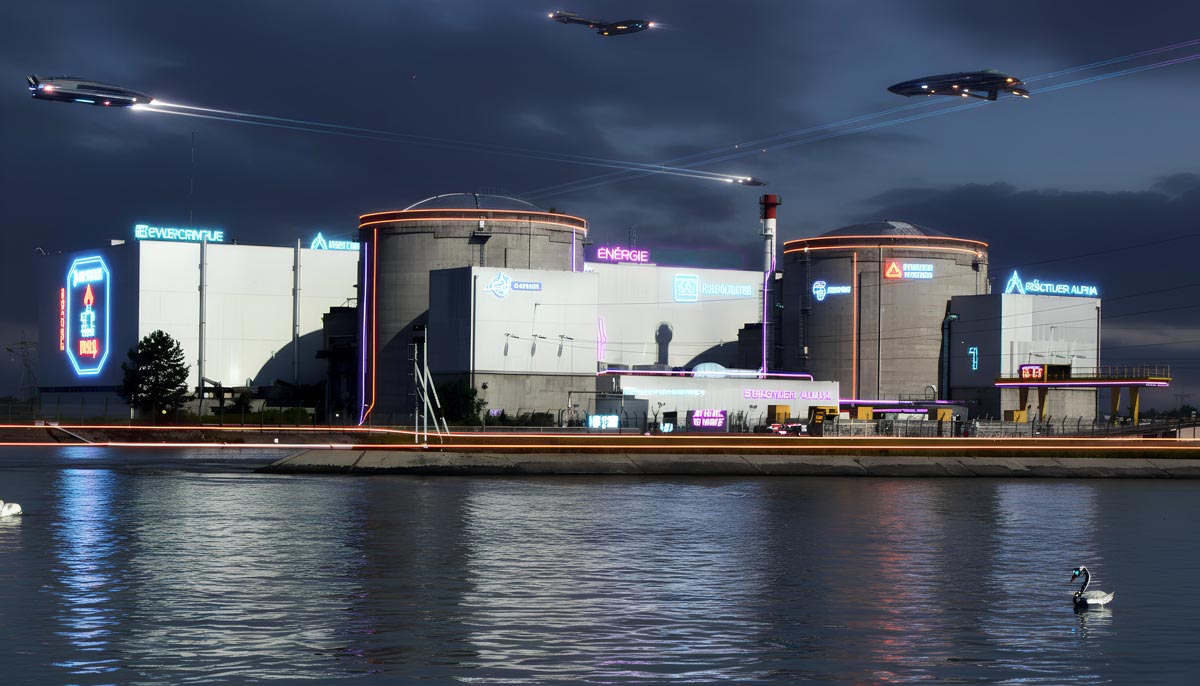
The daily life of a power plant is precision maintenance: inspections, fuel reloading, redundant tests. Scheduled shutdowns are millimeter-perfect marathons. It is these invisible actions that transform technology into reliability.
Where nuclear excels: delivering a lot of electricity continuously, stabilizing a highly renewable grid, decarbonizing industrial processes. Where it stalls: when speed is essential, when local acceptance is fragile, or when cooling water becomes the limiting factor.
Short term - 2030
New reactors: EPR2, SMR, and micro-reactors
Nuclear is not just about extending existing plants. It is also about trying to reinvent the industry with new generations of reactors. Behind the acronyms lie three different approaches: EPR2s, SMRs (Small Modular Reactors), and micro-reactors.
EPR2: the streamlined giant.
The Flamanville EPR crystallized criticism: cost overruns, delays. The EPR2 version aims for a simplified and standardized design, to build faster and better control costs, with high-power reactors of about 1.6 GW.
In France, EDF is planning six EPR2s at sites like Penly, Gravelines, and Bugey. The first would not enter service before 2038, making it more of a long-term answer than a 2030 one. The key bet is not physics; it is industrial execution and ramping up production.
SMR: "Small Modular Reactors."
From 50 to 300 MW, designed to be mass-produced in factories as "turnkey" modules, with installation in 3 to 4 years once the industry is established. Uses: medium-sized cities, industrial sites, data centers. Nuward in France, and projects in the United States, Canada, and Poland.
The appeal: bringing production closer to where it is used, reducing construction risk. But first, factories must be built, teams trained, and the supply chain secured.
Micro-reactors: the ultra-compact.
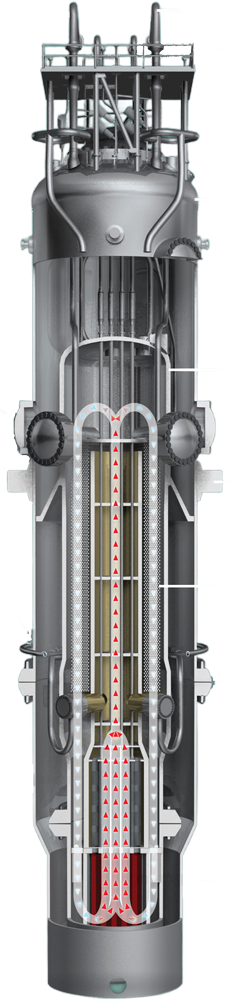
Micro-reactors take the idea further. From 1 to 10 MW, they are envisioned as autonomous "nuclear batteries," with fuel that lasts 10 to 20 years without reloading.
Prototypes exist, often for military or space use. In civilian applications, they are discussed for powering remote mines, islands, or sensitive facilities, with designs that require no water for cooling.
The US NRC is refining licensing rules for these "small guys," noting their inherent safety: their small size and intrinsic physics strongly limit the risk of core meltdown. Imagine an engineer in Alaska plugging in a micro-reactor like a diesel generator, but with no emissions and no fuel to import: that is creativity at work, decarbonizing remote areas where solar and wind struggle in winter.
"SMRs will not replace everything, but they will fill the gaps that intermittent renewables leave behind."
These new generations aim to address the great criticism of nuclear: too long, too expensive, too rigid. In theory, a mass-produced SMR could roll off a factory line like an Airbus. But first, you need to... build the factories, train the teams, secure the supply chain. Without that, the risk is reproducing the same delays, just on a smaller scale.
The real short-term question is therefore: can nuclear enter a modular and fast logic, in the manner of renewable energies, without losing the guarantees of safety and reliability?
Grids and Storage: The invisible links of the system
Without a solid grid and smart storage, even the best energy sources (nuclear included) remain empty promises.
High-voltage lines are the invisible highways of energy: they transport power from windy or sunny areas to cities, they pool surpluses from one region to compensate for shortfalls in another. But widening these highways is not simple: it takes copper, transformers, kilometers of cables... and the support of local residents. Without them, the system stalls.
In 2025, Europe is accelerating with projects like the North Sea Wind Power Hub, connecting offshore farms to multiple countries to pool weather risks. In France, RTE is investing 100 billion euros by 2040 to strengthen the grid, with submarine cables and interconnections (such as with Spain or Germany) to export nuclear surpluses or import Iberian solar. AI improves forecasts and flow optimization, reducing losses and congestion.
Alongside this, we need memory. Because electricity does not store itself naturally: it flows or it vanishes. This memory comes in temporal layers:
- Batteries (a few hours): perfect for getting through the evening when the sun has set, but expensive for lasting longer.
- Hydropower (days to weeks): pumped-storage reservoirs remain our natural "giant batteries," but their potential is limited in Europe.
- Hydrogen and thermal storage (weeks to seasons): still emerging, they promise to get through prolonged windless winters.
With creativity (such as "virtual power plants" where millions of home batteries synchronize via AI, or even flexible uses to absorb surpluses, like intensive computing or regulated Bitcoin mining turning excess into value), the system can be transformed into a self-regulating orchestra.
Let us now explore these clever optimizations that complement storage by recycling energy in other ways.
Demand-side optimizations and surplus valorization
The good news is that we do not have to solve everything through supply. We can also act on the consumption side:
- industrial demand response: shifting a factory's production when the grid is under strain,
- building management: heating a little earlier or later, depending on energy availability,
- electric vehicles: smart charging, or even feeding a little energy back when they sit idle in parking lots.
But what if we plugged our surpluses into... Bitcoin miners?
In the same spirit, surpluses can be routed to Bitcoin mining operators. This activity can start quickly, stop in a second, and relocate to wherever excess energy pockets exist. It absorbs kilowatt-hours that would otherwise be lost, curtails as soon as the grid needs everything, and monetizes isolated sites (dams far from cities, geothermal without customers).
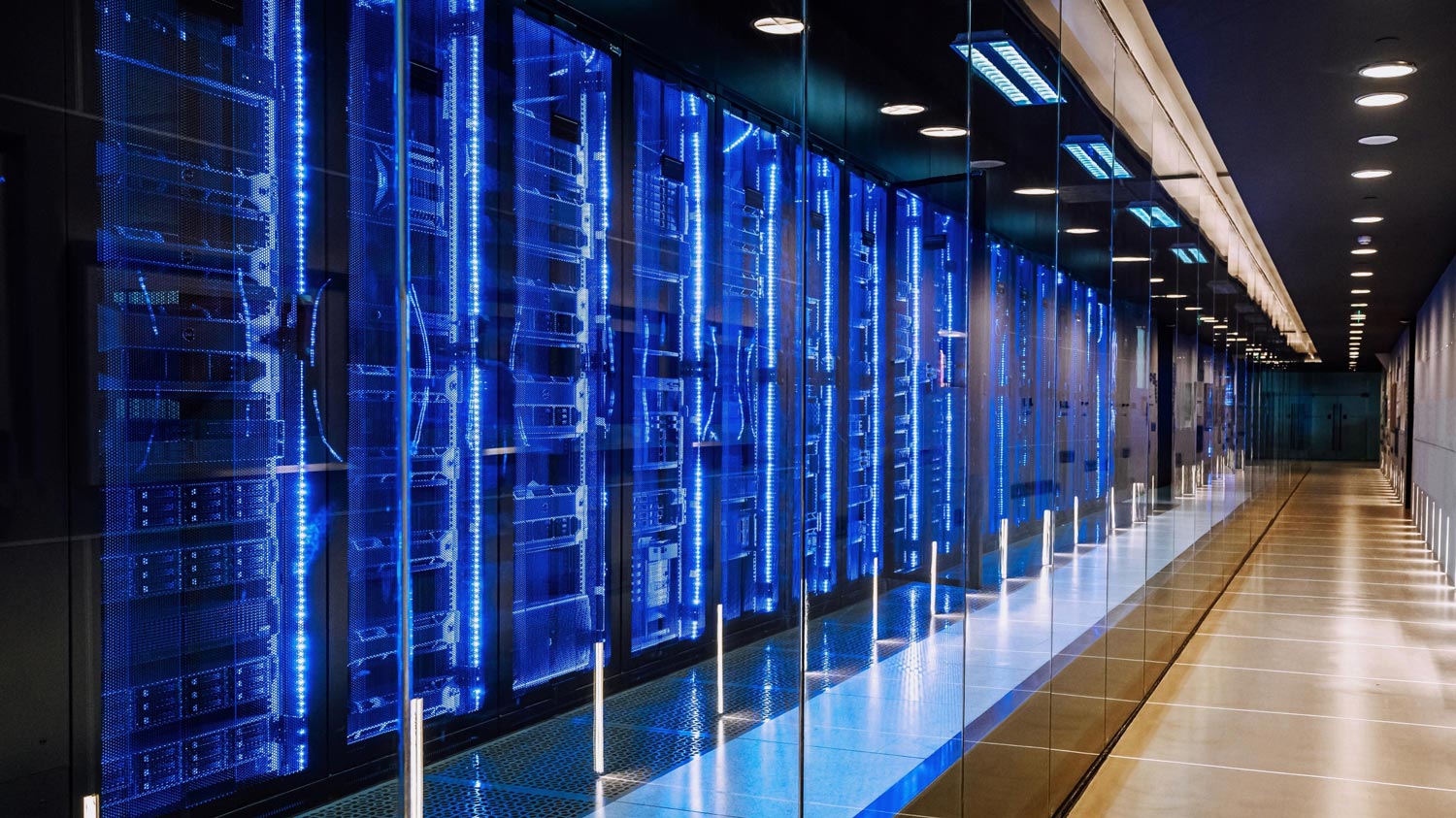
The framework must be clear: target surplus, congestion, or isolated zones; give absolute priority to the grid with immediate curtailment in case of strain; be transparent about the energy mix and carbon intensity; manage noise and heat (which can actually be recovered); accept the transitional nature - as soon as a line arrives or the surplus disappears, the containers are folded up and moved.
Under these conditions, mining resembles an economic battery without physical storage: value created from orphaned electrons. Well instrumented, it integrates into the palette of flexibilities alongside industrial demand response, managed buildings, and smart electric mobility. Deserves a dedicated deep dive ;)
Medium term - Horizon 2050
By 2050, electricity becomes the backbone of the economy: mobility, data centers, AI, electrolysis, heat pumps. According to reference trajectories, global nuclear capacity could grow from about 416 GWe in 2023 to nearly 647 GWe in 2050 under a current policies scenario, and more under more ambitious trajectories.
There is no single path. Here are three contrasting scenarios: one where nuclear serves as the dispatchable backbone, one where renewables dominate with strong grid-storage support, and a mixed scenario where everything is orchestrated for all-weather resilience.
"Nuclear backbone" scenario
The 2035-2045 decade will be like a long assembly line. No longer unique titanic construction sites, but series production: same vessels, same valves, same procedures, replicated from site to site. In this vision, large reactors relaunched in Europe and Asia set the pace while SMRs roll off factories in clusters to power medium-sized cities, industrial hubs, or data centers hungry for AI. We standardize, repeat, learn, and accelerate.
The starting point is factual: in its World Energy Outlook 2024, the IEA projects a world at about 647 GWe of nuclear by 2050 if current policies are followed. Our scenario pushes further: between 800 and 1,000 GWe if orders truly follow the commitment made by 31 countries since COP28 to triple global capacity by 2050. The difference is not ideological; it is industrial. Between the "trend" 647 GWe and the "high case" 1,000 GWe, there are factories, welders, financing, or their absence.
At the French scale, the framework is clear: about 61 GW today, an extended fleet where relevant, and a "heavy" relaunch with six EPR2s supported by preferential public loans, a trajectory designed to deliver the first new unit around 2038, if the schedule holds. Our "backbone" scenario places France between 60 and 80 GW by 2050: the low end if we mainly extend, the high end if the EPR2 series truly kicks off and if one or two SMR sites find their place near thermal uses.
What this changes, system in hand: less pressure on long-duration storage, more on the qualified workforce and evacuation networks. A solid dispatchable base reduces the need for seasonal battery banks; in exchange, lines, substations, and flexibility backup must be sized to absorb less predictable peaks: data centers, electrolysis, industrial heat pumps. It is a very concrete trade-off: we shift from stored gigawatt-hours to installed gigawatts and their physical integration into territories.
The hard core of the bet is not physics; it is execution. We know how to run reactors for 60 years with very low carbon intensity; we also know how much a derailed first-of-a-kind costs. The tipping point lies in unglamorous details: shutdown schedules optimized by AI, secured supply chains for large components, training schools that rebuild full graduating classes of workers and engineers. As long as these conditions are not met, the "backbone" remains a slogan. Once they are, the series effect drives down timelines and risks, just like in aerospace.
Nothing erases the blind spots: cooling under water stress with cooling towers or dry cooling, end-of-cycle management with properly sized and accepted deep geological storage, local governance where value and transparency are shared, otherwise nothing takes root. But this scenario does not sell "all nuclear"; it proposes a framework where wind and solar remain useful for shaving peaks and decarbonizing cheap electricity on sunny days while the grid holds everything together.
If this nuclear backbone materializes, the 2050 energy mix no longer needs a "wall of batteries" to survive winters, but it needs cadence: workshops running, interconnections being laid, teams being trained. It is a promise of stability in a more electric world, provided we accept that the real difficulty is no longer technological; it is industrial and social.
"Renewables gone wild" scenario
Here, we bet on a massive ramp-up of solar and wind, made viable by properly sized grids, multi-horizon storage, and demand that has become active.
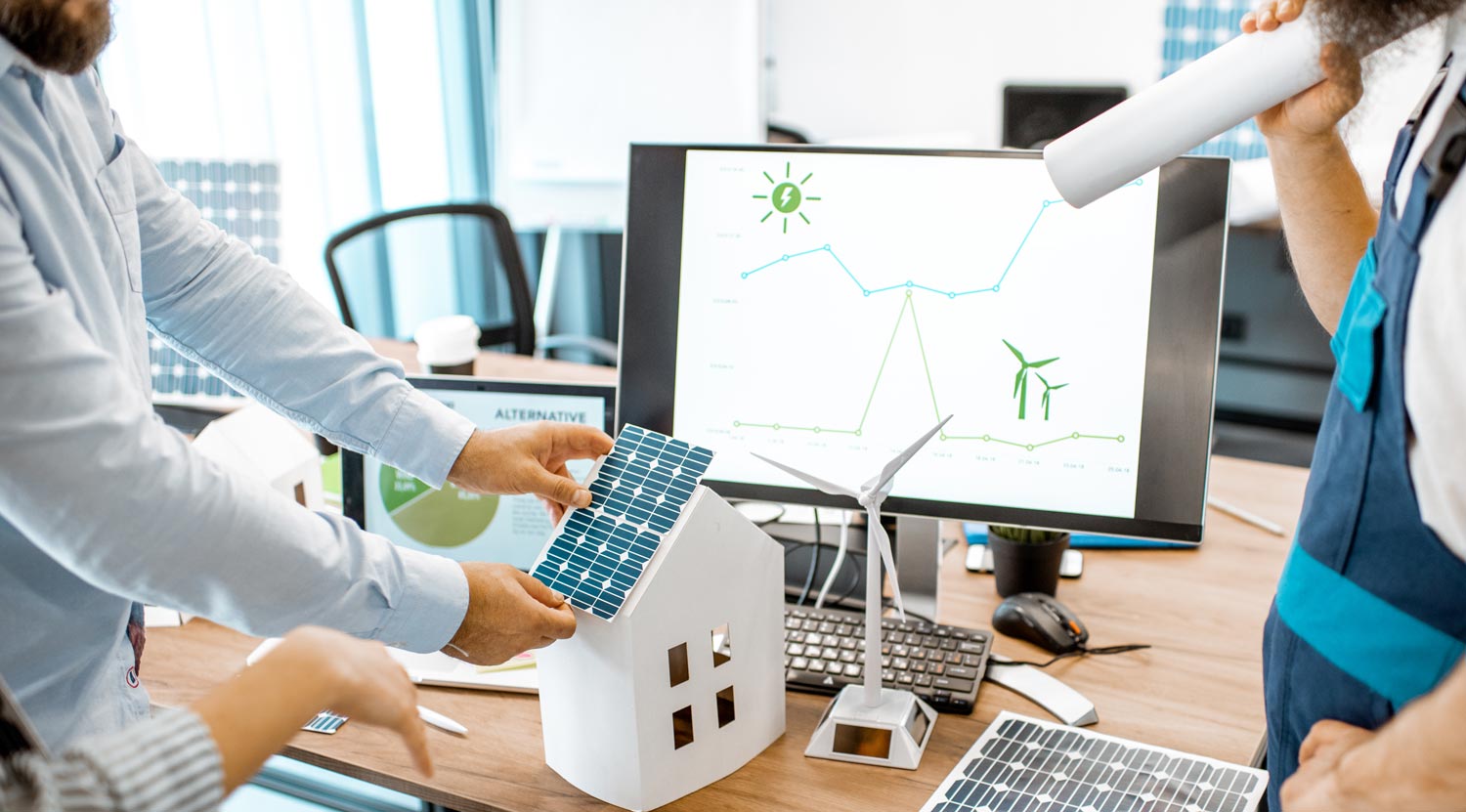
At dawn, the plain shimmers. Hectares of panels follow the sun with the patience of a sunflower. Offshore, white masts pierce the mist, their blades wresting from the wind an electricity that did not exist a minute before. This world moves fast: parks that spring up in eighteen months, rooftops equipped at the neighborhood scale, fields that become agrivoltaic. The grid engineer no longer has an on/off switch; they have a weather forecast.
The bet is simple to state, titanic to deliver: flood the system with solar and wind, then smooth out their moods with storage and smart grids. The IEA already promises a tripling of capacity by 2030; the "full throttle" version pushes the dial to 12,000-18,000 GW of cumulative renewables by 2050, while nuclear, relegated to a supporting role, provides a few dispatchable pockets, 400-500 GW, where inertia is valuable. The logic is not dogmatic; it is kinetic: renewables deploy faster than anything else.
In France, the blueprint takes shape at real scale. On the Atlantic coasts, offshore wind anchors to the seabed or floats above deep waters. Inland, rooftops absorb a growing share of daytime demand, while ground-mounted parks combine with agriculture or settle on brownfields. RTE strengthens interconnections to pool risks, export the midday surplus, import northern wind when the anticyclone falls asleep. From the air, Europe becomes an HVDC fabric linking pockets of wind and sun like an energy high-speed rail network.
The challenge remains: taming time. Here, storage is not a gadget; it is a vital organ. Batteries smooth out evenings and small wind gaps; pumped-storage plants, reversible dams, swallow sunny weekends to release them on Monday. Deeper still, hydrogen and thermal reservoirs take over to weather gray, windless winter weeks. The other leg is demand: buildings that overheat the day before to release the next day, factories that shift a drying cycle, electric cars that charge when production abounds and feed a trickle back when the grid tightens. Millions of devices become a virtual power plant steered by software; algorithms spot the clouds before they arrive.
On the ground, the revolution is very material. It takes copper, transformers, inverters, kilometers of cable, and land. One gigawatt of solar requires tens of square kilometers; offshore wind reduces the ground footprint but adds port and vessel challenges.
The economics follow a different grammar. The more renewables there are, the more surplus peaks emerge: those June afternoons when there is too much sun to know what to do with. Rather than curtailing, we learn to valorize. Episodic electrolysis to make hydrogen. Industrial cold stored in ice tanks. Heat stored in molten salt. Data center computations scheduled during peak hours. Electricity ceases to be a taut wire. It becomes a raw material to be shaped.
The dark side is well known: permits that drag on, materials under tension, grids that do not advance at the same pace as parks, windless winters if gas backup is kept. In this scenario, AI is not a veneer; it is the conductor preventing cacophony: fine-grained forecasts, dynamic pricing, real-time arbitrage between production, storage, and demand response. When it works, the magic happens: very low marginal costs in fair weather, accelerating electrification, reduced dependence on imported fuels. When it stalls, disorder is produced: connection queues, losses, political setbacks.
This "renewables gone wild" is not a fairy tale. It is an obstacle course won through quantity and interconnection rather than the single piece, where difficulty shifts from the reactor to the territory, where the question is not "can we produce" but "can we connect, store, accept." If it succeeds, the system becomes flexible, reversible, and remarkably cheap whenever the sun and wind play their part. If it fails, it does not fail for lack of engineering; it fails for lack of cohesion.
Two paths, two demands. The "backbone" requires industry and time; "renewables gone wild" requires territory and grids. In real life, countries do not pick a side; they compose. Let us enter the polyphonic mix, the one that adds up strengths and neutralizes weaknesses.
"Polyphonic mix" scenario: the harmony of opposites
Neither nuclear dogma nor solar rush: this scenario embraces complementarity: a nuclear foundation, renewable dynamism, memory through storage, coordination through AI.
The most credible future has not picked a side; it harmonizes both. This "polyphonic mix" scenario imagines a world that no longer seeks technological purity, but dynamic balance: a mosaic of solutions, each playing its right note in an ensemble under constant tension.
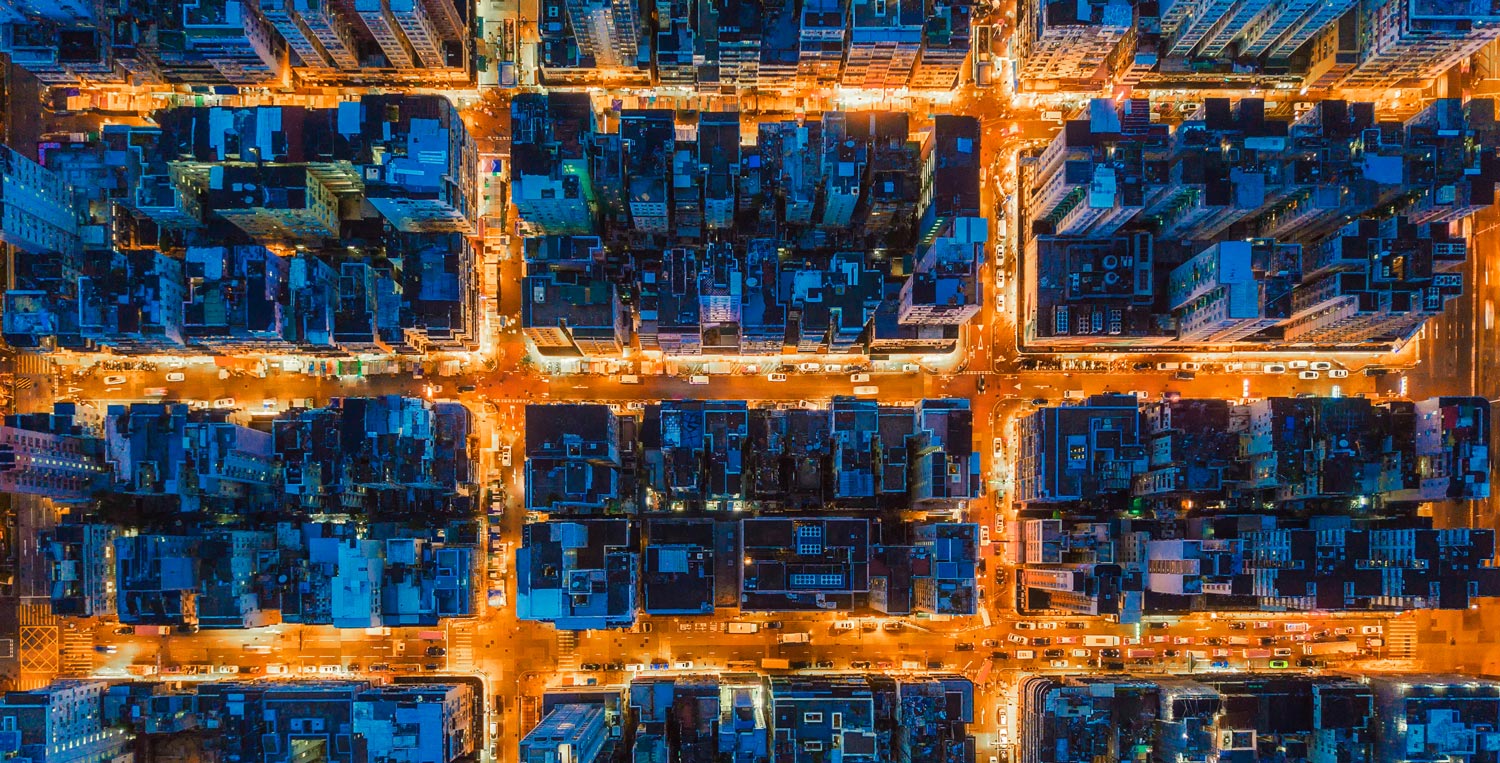
At the global scale, the curves intersect: solar and wind dominate growth, nearly 70% of new capacity installed each year, while nuclear maintains a stable presence around 700 to 800 GWe, enough to stabilize grids and provide the base of the mix. Geothermal adds a constant bass note, a murmur of continuous heat that sustains sunless winters. Hydropower, hydrogen, and biomass complete the ensemble, not as extras, but as instruments of nuance. And AI, like an invisible maestro, synchronizes flows to the millisecond, balancing before a dissonance even appears.
Balance in practice
Take a day in 2045. At 11 AM, Spanish solar overflows; electrolysis fills salt caverns in southern France. At 7 PM, Danish wind takes over on the northern front. Meanwhile, French nuclear plants maintain a constant base, the basso continuo of the orchestra, while Alpine dams adjust to smooth transitions. Everything is connected, synchronized, distributed. The grid breathes to the rhythm of the planet.
In this configuration, nuclear becomes the framework, renewables the living ornamentation, storage the memory, geothermal the slow pulse, and AI the system's consciousness. We no longer speak of production, but of energy orchestration.
An economy of complementarity
The great shift of the "polyphonic mix" is not only technical; it is economic. Nuclear plants, expensive to build but cheap to operate, provide stable and predictable electricity. Renewables deliver a cheap flow when the weather permits. Between the two, flexibility markets are being invented: individuals paid for a few kilowatt-hours of demand response, manufacturers who optimize their processes according to price signals, electric vehicles that become rolling batteries.
This model reduces peaks, valorizes troughs, and crushes system costs. The grid becomes a marketplace for instant energy. In some regions, energy cooperatives emerge: neighborhoods with solar panels, regional micro-SMRs, shared batteries. Energy becomes territorial; it becomes visible again, almost tangible.
The challenges of compromise
But harmony does not erase dissonance, and political tensions remain. Who decides investment priorities? Who finances redundancy? How to distribute value between centralized production and local actors? A "polyphonic mix" is demanding: it requires coordination, governance, and trust. States must learn to plan without freezing, to delegate without losing control. And citizens must understand that perfection does not exist, only shifting balances to be maintained collectively.
"What is new is not the technology; it is the diplomacy of energy. Electrical grids are becoming political networks."
Energy as culture
This scenario marks a shift in perspective: energy ceases to be a sector; it becomes a culture. We produce it, share it, manage it. It runs through cities like a common language. Rooftops speak to the wind, rivers respond to data centers, reactors keep the tempo. The mix is no longer a battle of schools; it is a living score where every note counts.
In 2050, the world of energy will not be binary; it will be polyphonic, made of fragile balance and inventive resilience. The risk is no longer running out of watts, but lacking the connection between those who produce, store, and consume them.
For above this terrestrial symphony, another horizon already looms: fusion, space-based solar, and super-deep geothermal, technologies that tomorrow could take our energy orchestra to an entirely different octave.
2100 and beyond: the age of tamed fires
The century draws to a close, but the quest continues. As the Earth electrifies, another promise emerges: that of new fires, denser, cleaner, closer to the source of all heat: the stars. Humanity, having learned to split atoms, now attempts to reunite them.
Fusion: taming the sun
Beneath the silver cladding of a building in Cadarache, Provence, thousands of technicians bustle around a giant ring. ITER, the global project born of a 1980s utopia, has aged, but it held. Around mid-century, the first deuterium-tritium plasmas ignite in the magnetic core. It is not yet a power plant, but a proof of physics on a planetary scale: the energy of a star contained for a few seconds in a magnetic field.
In parallel, a generation of private startups has reinvented the dream. Commonwealth Fusion Systems, Helion, Renaissance Fusion, and others are miniaturizing the machine. High-field superconducting magnets, optimized geometries, compact systems worthy of jet engines: fusion leaves the labs for industrial halls. Their prototypes still only power local demonstrators, but the trajectory is clear: if fission built the 20th century, fusion could frame the 22nd.
"We are the first to manufacture stars on the ground," smiles a Helion engineer. "The day they stay lit for more than an hour, everything will change: energy will cease to be scarce."
If a compact breakthrough occurs, these "stars in a jar" could be installed in urban settings. The challenge of safety remains: evolving standards and activated materials to manage without compromise.
Super-deep geothermal: drilling into the planet
While some look to the sky, others drill into the Earth. With advanced drill bits and ultra-high-temperature alloys, super-deep geothermal plunges to about twenty kilometers, where the crust nears 500 degrees Celsius. These "magmatic straws" offer nearly continuous heat, day and night, independent of climate.
Iceland, a historical pioneer, exports its know-how to Kenya and Indonesia. In Europe, France and Switzerland are exploring granitic basins with caution, because at great depth, heat flirts with seismicity. But progress is real: by around 2090, some thirty metropolises power their heating networks through super-deep wells, vertical columns where a pressurized fluid circulates and resurfaces as dry steam. A subterranean, silent, local energy: the perfect counterpart to space-based solar. Wild card: chronic droughts could accelerate this "dry" sector, but long-term material durability remains a bottleneck.
Space-based solar: light without night
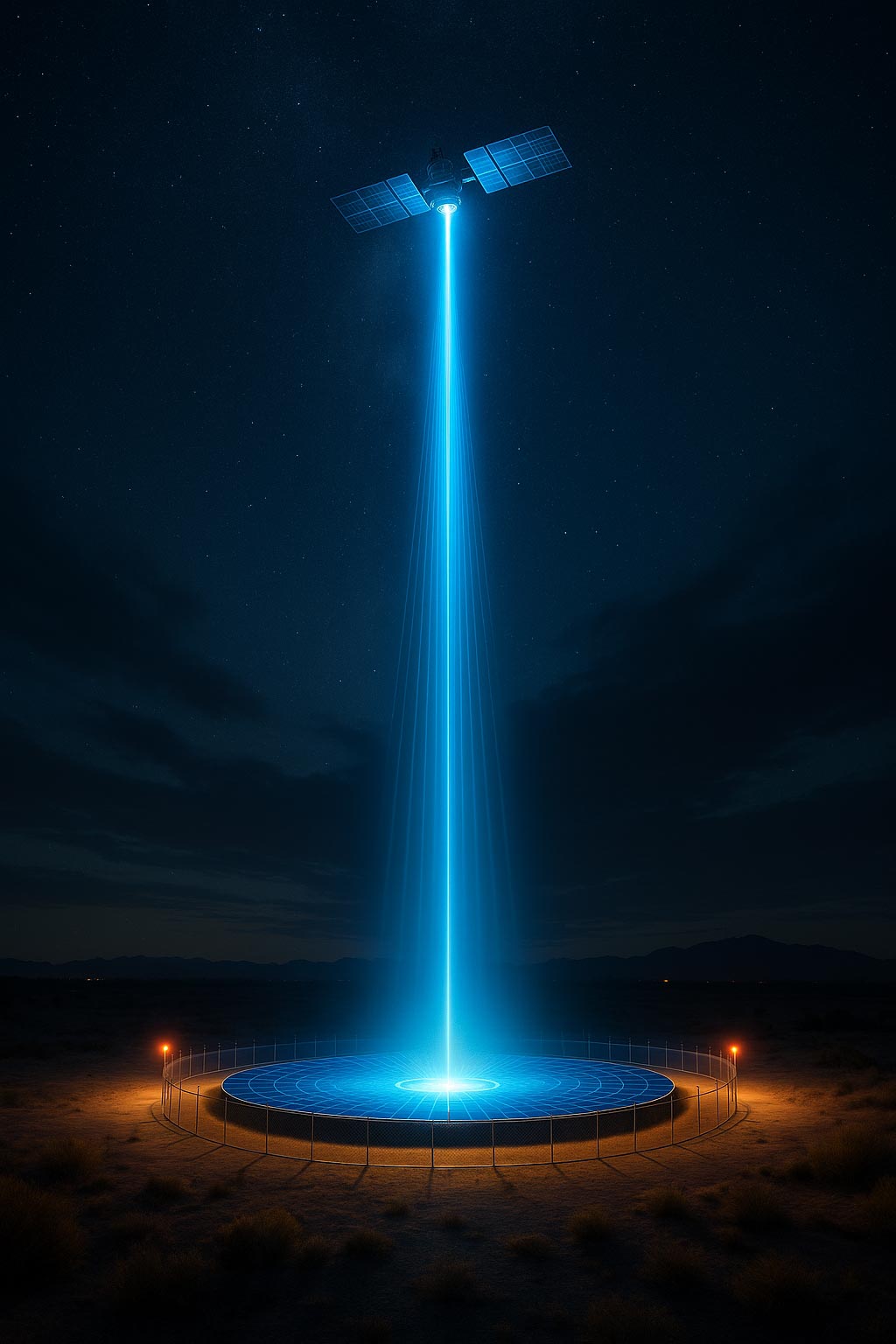
Above the stratosphere, solar platforms orbit and capture sunlight continuously. Once extravagant projects are becoming credible thanks to reusable launchers and ultra-lightweight microwave antennas.
Around 2080, a first orbital power station beams up to 1 GW to Earth via a beam around 2.45 GHz, converted to electricity on the ground. No CO₂, no clouds, no night. Images of this "blue beam" illuminating the Pacific become the symbol of a humanity that has tamed light.
The risk is no longer technical; it becomes political. Who controls these "artificial suns"? Who owns the light? Energy, once a matter of carbon and copper, becomes a question of orbit and sovereignty.
A natural application: converting this flux into green hydrogen via electrolysis, then into synthetic fuels for aviation without fossil carbon.
The intelligence of grids: the era of conscious flows
On Earth, grids become living organisms. Every city, every household, every battery communicates in real time. AI is no longer a tool; it is a cognitive infrastructure that balances, anticipates, and repairs. Advanced models forecast an "electrical weather" several days out; autonomous systems detect micro-failures before they exist.
The grid manages itself, learns from its mistakes, adjusts its flows like a heart regulates its rhythm.
A humanity with free energy
If energy becomes nearly infinite, it is not the end of the story. It is a new relationship with the world. When the energy constraint disappears, others emerge: raw materials, water, attention, meaning. Producing without counting is not enough; we will have to think about limits differently, not as scarcity, but as balance.
Between 2100 and 2200, energy will have ceased to be a fight for survival. It will have become an art of adjustment, a symphony of flows between Earth and sky, between fire and code.
And perhaps then, we will understand that true progress was not taming the sun, but learning to live in its light.
Conclusion: building tomorrow's orchestra
Throughout these lines, we have traversed an energy system in metamorphosis, from today's realities to the horizons of 2100. Ultimately, the future of energy is not a battle between nuclear and alternatives; it is a symphony where each instrument, whether dispatchable like nuclear or hydro, intermittent like wind and solar, or stored like batteries or hydrogen, finds its score. It is not a triumphant solo; it is a harmonious ensemble where reactor miniaturization, smart grids, and properly sized storage come together for a world free of fossil carbon without losing reliability. At Fractales, this vision fills us with wonder; it transforms complexity into opportunity, reminding us that wonder is the first step toward knowledge and that our boundless curiosity drives us to decode these revolutions in order to better shape them.
So, it is everyone's turn to play. Follow the indicators, question the myths, watch for weak signals: relevant urban mini-reactors, learning grids, advancing fusion, deep geothermal murmuring beneath our feet. The future is built as much by technology as by our daily choices, those of innovators, decision-makers, and vigilant citizens.
The world moves fast, but with the right keys to understanding, we no longer endure it; we compose it. For the energy of the future will not only be the energy we produce, but the energy we understand. It is a positive, resilient future, where energy serves humanity rather than constraining it.
And as futurist Bertrand Piccard often says,
"It is not by refusing change that we create the future; it is by making it desirable."